


 Manga Longa
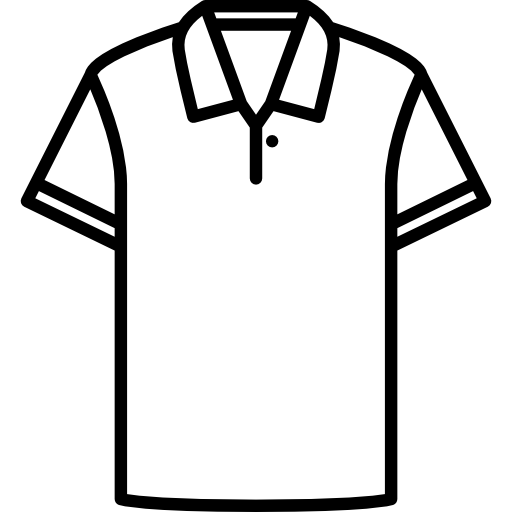 Polo
Polo

 Sarja
Sarja


Deciphering Fishery Data: The Significance of Accurate Catch Reporting in Sustainable Fisheries

In an era where environmental conservation and sustainable resource management are more critical than ever, the integrity of fishery data becomes a cornerstone of effective policy and economic stability. The catch figures reported by fishermen not only influence regulatory decisions but also shape market values, conservation strategies, and public perception of marine health. As such, understanding the nuances of fish catch data, including the metrics and methodologies involved, is essential for industry stakeholders and policymakers alike.
Fishery Data: The Backbone of Sustainable Management
Fisheries worldwide are subject to increasing scrutiny as global fish stocks face mounting pressure from overfishing, climate change, and habitat degradation. Accurate data collection empowers managers to set sustainable quotas, monitor stock health, and prevent ecological collapse. For example, data from the Fisherman catches fish values demonstrate how meticulous recording of catch volume, species composition, and fishing effort informs strategies that balance economic interests and conservation goals.
The Art and Science of Catch Valuation
Evaluating the worth of a catch extends beyond simple weight metrics. Quality, species type, market demand, and seasonal factors influence the final value. Advanced fishery management systems now incorporate electronic logbooks, biometric data, and real-time reporting to improve the accuracy of catch valuation — enabling a transparent and verifiable record that benefits fishermen, buyers, and regulators.
Industry Insights: Data-Driven Decision Making
| Parameter | Impact on Fishery Valuation | Relevance to Sustainable Practices |
|---|---|---|
| Catch Volume | Determines overall revenue; too high may indicate overfishing | Requires monitoring to avoid stock depletion |
| Species Composition | Different species command different market prices | Critical for maintaining ecological balance |
| Fisherman Catch Data Accuracy | Ensures fair pricing and compliance with regulations | Supports sustainable quota management |
Real-World Application: How Reliable Data Shapes Industry Outcomes
One illustrative example comes from Norway’s rigorous fishery monitoring system, which relies heavily on precise catch data to manage their cod stocks. The transition to electronic reporting has yielded notable improvements in stock assessments and quota allocations, demonstrating the tangible benefits of trustworthy data. Similarly, in the UK, regulators emphasize data integrity to prevent illegal, unreported, and unregulated fishing, which can significantly distort fishery valuations and threaten sustainability.
Looking Forward: Embracing Technology for Transparency
The integration of innovative technologies such as blockchain for traceability, AI-driven analytics, and mobile reporting apps is revolutionizing how catch data is collected and validated. These advancements foster greater transparency and trust, allowing stakeholders to confidently assign “fish values” rooted in verifiable data. As the industry continues to evolve, leveraging these tools will be vital in balancing economic growth with ecological stewardship.
For in-depth insights into how catch data influences fishery valuations and sustainability practices, explore the resource at Fisherman catches fish values.
Conclusion: The Critical Role of Accurate Data in the Future of Fisheries
Ultimately, the integrity of fishery data underpins the shared goal of sustainable and economically viable fishing industries. From precise catch reporting to innovative valuation methods, the collective effort of industry stakeholders and regulators is required to ensure fishery resources remain resilient for generations to come. Continuously advancing data collection and analysis techniques will be essential in fostering a future where fishing is both profitable and environmentally responsible.
“Reliable data is the foundation upon which sustainable fisheries are built. Accurate catch reports inform smarter management decisions that benefit both the industry and ocean health.”